

Blog
Planning Dust Collection for Multiple Woodworking Machines

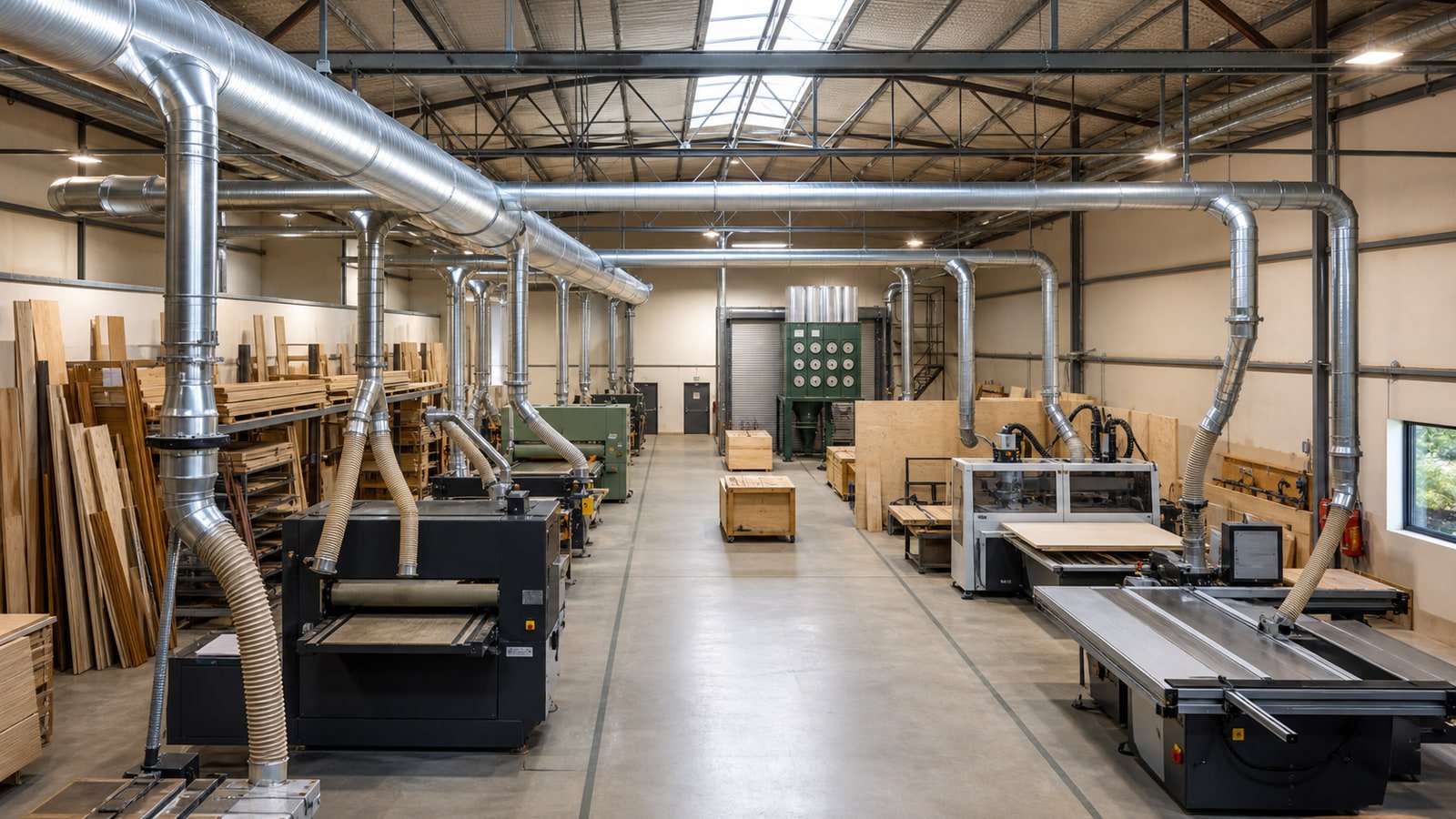
Dust Collection
Planning Dust Collection for Multiple Woodworking Machines
Build a shop dust-collection plan around connected machines, simultaneous use, duct resistance, filtration, waste handling, facility conditions, and future changes.
A dust collector cannot be selected from motor size or inlet diameter alone. In a multi-machine shop, source requirements, duct resistance, simultaneous operation, material type, filtration, discharge, waste handling, and building conditions all affect the system.
Begin by treating dust collection as a facility system. Machine ports, ductwork, collector, return or exhaust air, controls, cleanup procedures, and maintenance must work together.
> This guide is a planning aid, not an engineered dust-control or fire-protection design. Use qualified professionals to evaluate combustible dust, ventilation, electrical classification, fire and explosion protection, permits, and other requirements applicable to the facility and materials.
Build a machine-source inventory
Create one line for every machine or pickup point. Record:
- Manufacturer and exact model
- Material processed
- Number, size, and location of dust ports
- Manufacturer-stated airflow and pressure requirements
- Whether ports operate together or separately
- Chip, shaving, or fine-dust characteristics
- Typical operating schedule
- Whether the machine is fixed or moved
- Any automatic gates or control signals
Use current manufacturer documentation where available. Port diameter alone does not establish the required airflow, and reducing a connection can affect capture and pressure loss.
Include hand-sanding stations, floor sweeps, cleanup drops, and other sources only after their safe, approved use has been evaluated. A cleanup connection can materially change system demand if it operates with production machines.
Determine realistic simultaneous use
The connected total and the operating total are different. Document which machines can run at the same time during a normal shift and during the busiest credible condition.
Ask:
- Can two or more operators start machines independently?
- Does a production cell run several pickups at once?
- Are some gates manual, automatic, or permanently open?
- Will future machinery be added?
- Is cleanup performed while production continues?
Do not base the system on an operating rule that the shop cannot reliably enforce. If performance depends on specific gates being closed, the controls, training, and supervision must support that condition.
Account for duct resistance
Air moving through a duct system loses pressure through straight runs, elbows, branches, transitions, flexible hose, gates, pickups, separators, filters, and discharge components. The longest path is not always the path with the greatest resistance.
A qualified designer can use the required airflow at each active source and the resistance of the proposed network to establish the fan operating point. This is more meaningful than comparing collectors by an unrestricted airflow claim.
During layout planning:
- Keep machine connections consistent with approved requirements
- Minimize unnecessary flexible hose and abrupt transitions
- Provide access for inspection and cleaning
- Support ductwork independently from machine ports
- Protect duct routes from vehicles, stored material, and building conflicts
- Label gates and branches for operators and maintenance staff
Any changes to a machine hood or enclosure should be reviewed before implementation; an improvised opening can reduce capture at the point where it is needed.
Separate chips from fine dust in the planning
Planers, moulders, saws, routers, and sanders do not generate identical waste. Large chips affect conveying and container capacity, while fine sanding dust places different demands on capture, filtration, housekeeping, and risk controls.
Document the wood species, engineered materials, coatings, adhesives, and other substances entering the system. Do not mix materials without verifying that the system and operating procedures are appropriate. Safety data, manufacturer instructions, and professional assessment should guide the handling of unfamiliar or hazardous material.
Choose filtration or discharge deliberately
Collector media, cleaning method, dust loading, air-to-media relationship, discharge location, and system condition influence how the collector operates. If filtered air returns to the building, the design must consider indoor-air requirements, fine-particle control, makeup air, temperature, and applicable safety provisions. If air exhausts outdoors, replacement air, energy use, weather, permits, and building pressure may become important.
Avoid selecting a filter from a marketing label alone. Ask for the exact media, tested performance information, cleaning method, replacement procedure, and operating limits for the proposed configuration.
Plan waste handling from the start
Collection is not complete until dust and chips can be removed safely. Compare bags, drums, bins, containers, rotary valves, compactors, or other discharge methods according to the expected material volume and facility process.
Consider:
- How staff know a container is approaching capacity
- How the system is isolated before service
- Container weight and movement
- Bag or liner changes
- Spill control and housekeeping
- Approved disposal or reuse pathway
- Access for carts, forklifts, or collection vehicles
A container that is difficult to reach or change can lead to overflow, downtime, or unsafe workarounds.
Coordinate controls and machine operation
Review how the collector starts, how gates operate, and what happens when airflow is unavailable. Depending on the engineered design, the system may use manual controls, automatic gates, current sensing, machine interlocks, variable-speed control, differential-pressure monitoring, or other devices.
Operators need a clear method to recognize an abnormal condition. Establish who responds to blocked ducts, damaged hose, filter alarms, full containers, or loss of extraction—and whether affected machinery must stop.
Include the building and surrounding environment
Confirm collector location, foundation or support, weather exposure, service access, noise, electrical supply, compressed-air needs, duct penetrations, and separation from doors, air intakes, property lines, or occupied areas as applicable.
Dust systems may also affect building pressure and heating or cooling. Engage qualified specialists early enough that machinery selection, collector location, electrical work, permits, and construction can be coordinated before delivery.
Create an inspection and maintenance plan
The manufacturer and system designer should define inspection and service requirements. A facility plan may include:
- Daily observation of pickup condition and obvious leakage
- Container-level checks
- Inspection of hoses, ducts, gates, and supports
- Filter differential-pressure or condition checks
- Approved filter-cleaning and replacement procedures
- Fan, bearing, drive, and motor inspection
- Verification of controls and safety devices
- Housekeeping in hidden or elevated areas
- Documentation of changes to connected machinery
Never enter, open, or service collection equipment without following approved shutdown, isolation, and safety procedures.
Information to prepare for a dust-collection discussion
Send:
- A floor plan with machine locations
- The machine-source inventory
- Current manufacturer extraction requirements
- Simultaneous-use scenarios
- Materials and expected waste type
- Existing collector and duct details, if applicable
- Building and proposed collector-location information
- Electrical and compressed-air availability
- Current waste-handling method
- Planned equipment additions
Good dust-collection planning begins at every machine and ends with a system the facility can operate, inspect, and maintain as designed.
Discuss Dust-Collection Equipment
Share the machine, material, application, utilities, and site details that matter to your project.
Discuss Dust-Collection EquipmentRelated Reading
More Machinery Guidance
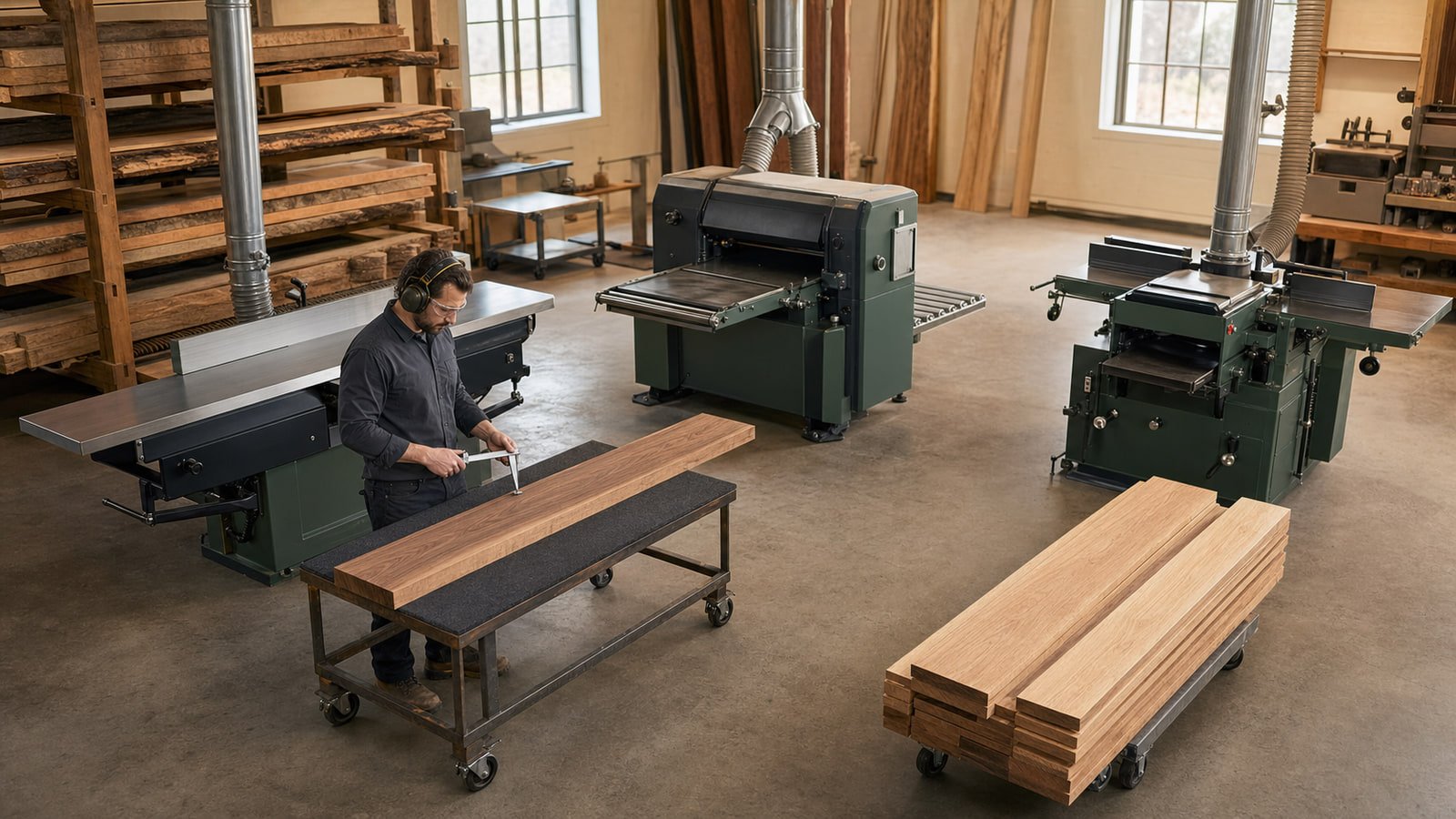
Jointer, Planer, or Combination Machine? Mapping the Stock-Preparation Workflow
Understand what each machine contributes to flattening, straightening, and thicknessing stock before deciding between separate and combination equipment.
Read guide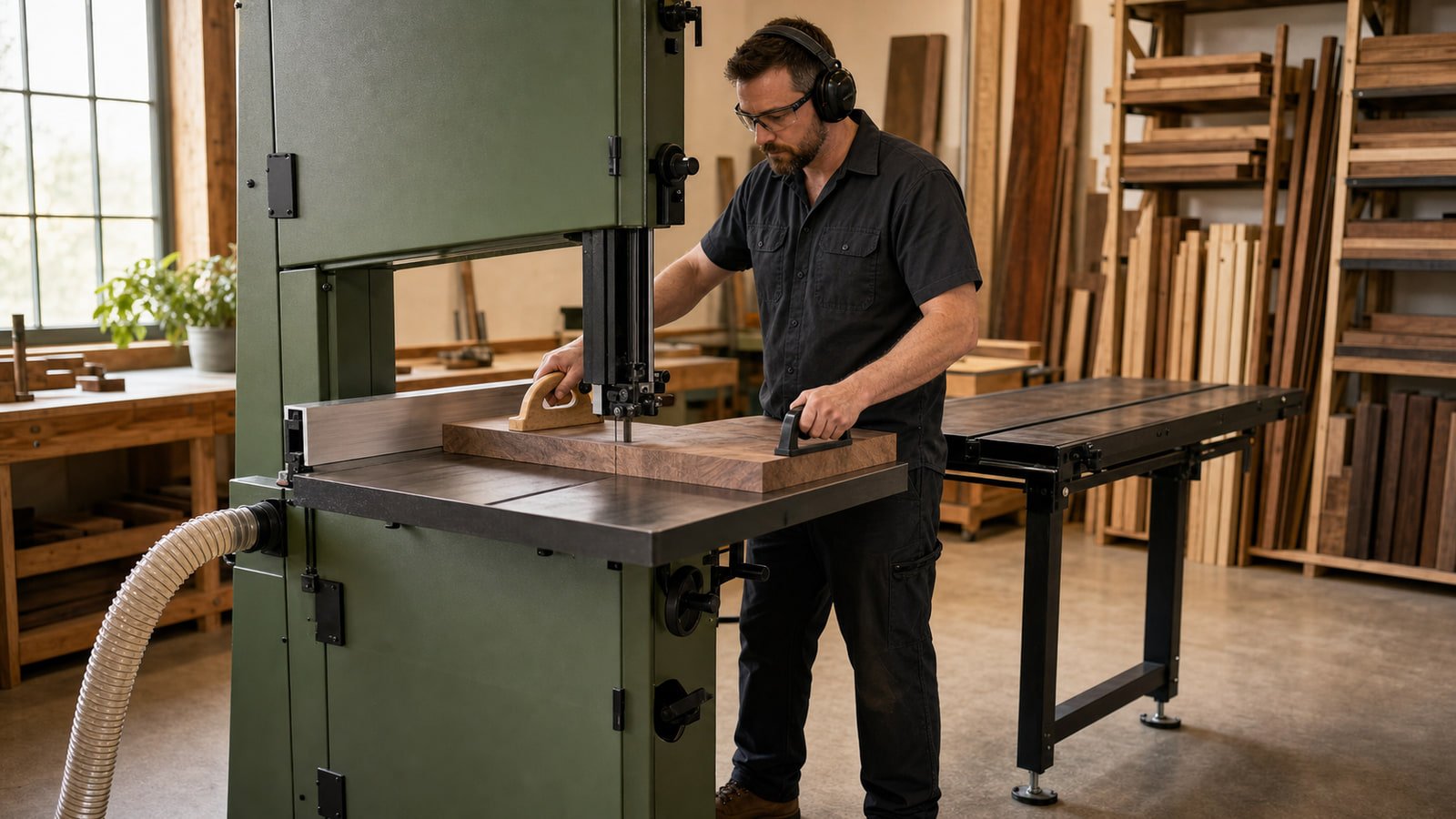
How to Choose a Bandsaw and Blade for the Work You Actually Cut
Match the bandsaw format, cutting envelope, blade, feed method, support, power, and dust collection to the material and cuts your shop performs.
Read guide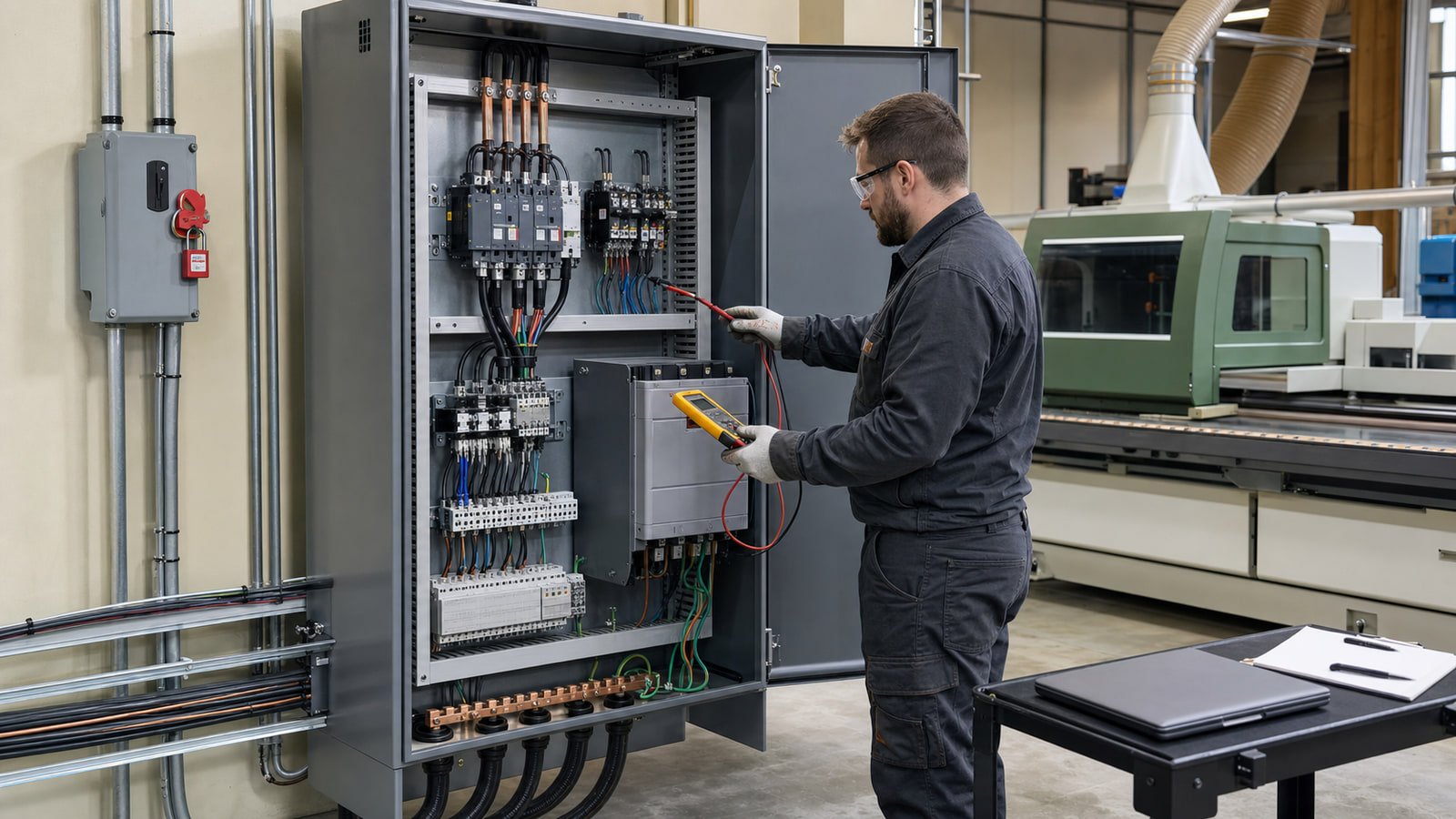
Single-Phase vs. Three-Phase Woodworking Machinery: What to Verify Before Ordering
Confirm the machine nameplate, facility supply, complete connected load, and qualified electrical plan before placing a machinery order.
Read guide