

Blog
What to Compare Before Buying an Edgebander

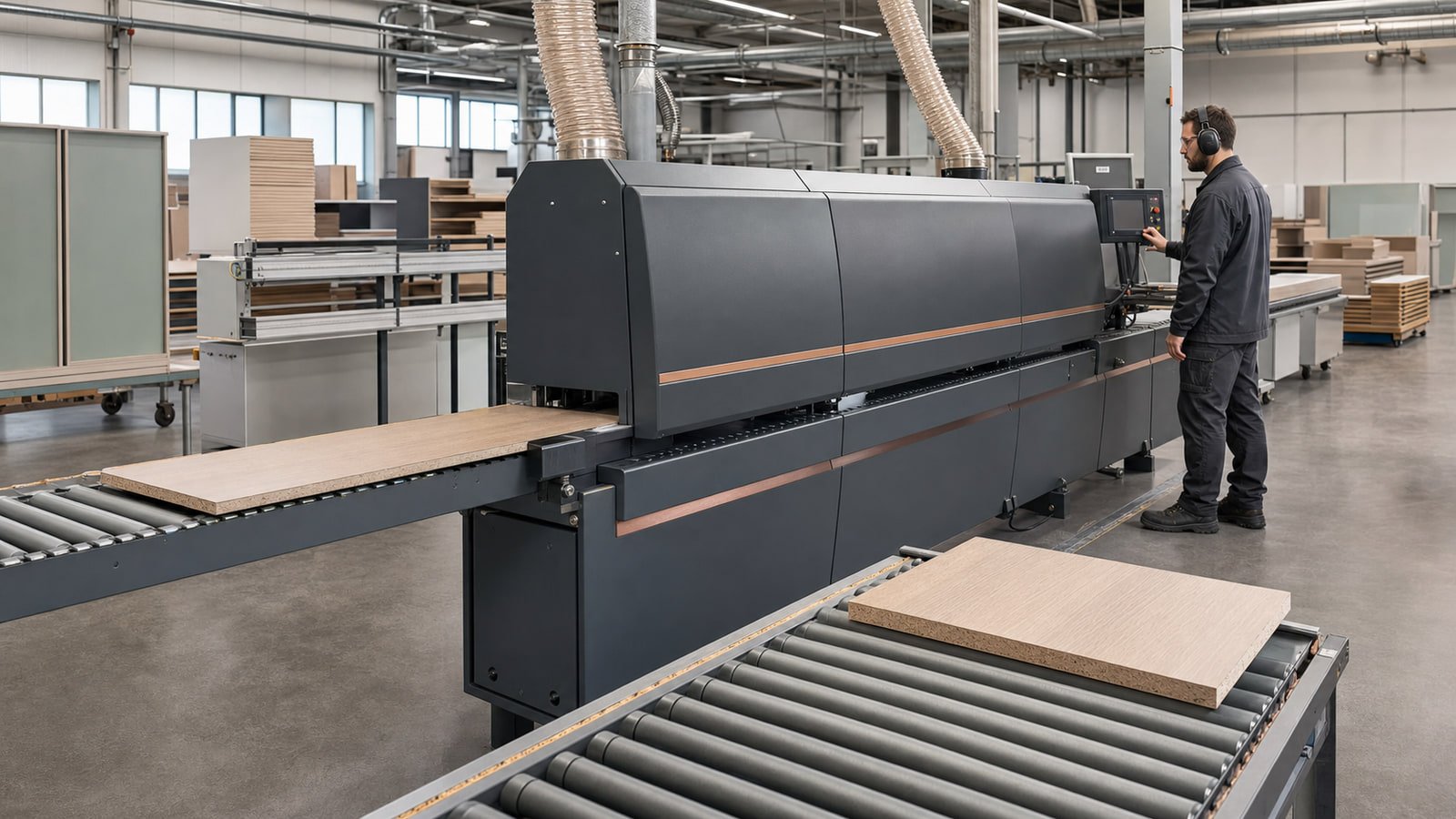
Edgebanding
What to Compare Before Buying an Edgebander
Define your panels, edge materials, finish standard, production pace, utilities, and maintenance plan before comparing edgebander configurations.
An edgebander is a sequence of operations, not a single specification. Panel preparation, adhesive application, pressure, trimming, scraping, and finishing all contribute to the completed edge. The suitable configuration depends on the materials and quality standard your shop expects to run.
Before comparing models, describe the edge process from the incoming panel to the next workstation.
Document the panel range
Record the core materials, surface materials, and dimensions the machine must accept. Include routine and maximum panel length, width, and thickness, plus the smallest parts the shop expects to process.
Note whether parts are square, rectangular, shaped, already drilled, or otherwise sensitive to handling. Record the condition of the edge entering the machine. Saw marks, chipping, dimensional variation, contamination, and poor squareness can affect later operations.
Minimum part dimensions deserve special attention. A machine may have the overall capacity for a large panel while requiring a specific minimum length, width, or edge thickness for safe, stable feeding. Verify these limits on the exact configuration.
Define the edge material
List each material the shop intends to apply, such as thin decorative edging, thicker polymer edges, veneer, or solid-wood strips. For each, record thickness, height, coil or strip format, surface sensitivity, and the range of colors or materials that drives changeovers.
Ask how the edge is stored, fed, cut, and changed. If several edge types are used during a normal shift, changeover time and adhesive management may matter as much as maximum feed capability.
Material compatibility must be confirmed through current machine, adhesive, and edge-supplier documentation. Avoid assuming that one temperature, pressure, feed setting, or glue system applies to every combination.
Map the processing stations
Available stations vary by machine. Build the comparison around the functions your finished part requires.
Panel-edge preparation
Pre-milling units can prepare the panel edge immediately before adhesive application. If this station is being considered, review the stock-removal range, tooling, adjustment, extraction, and the quality of the incoming panel. Pre-milling does not correct every upstream problem; parts still need to meet the machine’s dimensional and material requirements.
Adhesive application and pressure
Compare the adhesive system, warm-up and changeover procedures, cleaning requirements, compatible materials, and operator tasks. Confirm how adhesive is applied and how the pressure section supports the edge while the bond is formed.
If color changes, adhesive changes, or production gaps are common, ask for a step-by-step description of the normal changeover and shutdown procedure.
End trimming and top-and-bottom trimming
These stations remove excess edge material at the ends and along the top and bottom of the panel. Review tooling, adjustment method, part requirements, collection of trimmed waste, and the expected condition before the next station.
Scraping, buffing, and finishing
Profile scraping, glue-line scraping, buffing, or other finishing units may be used to refine the completed edge. Confirm which units are standard, optional, or not available on each model. Evaluate the result on your own panel, edge, and adhesive combination when possible.
Compare the finished edge—not only feed speed
A published feed speed does not describe the complete production result. Actual workflow includes panel staging, edge and adhesive changes, setup checks, first-piece inspection, cleaning, and movement to the next process.
Create an acceptance sample that reflects a routine job. Inspect:
- Edge position and alignment
- End and corner condition
- Top and bottom trim
- Visible glue line or residue
- Surface marking, scratching, or chipping
- Consistency across repeated parts
- Preparation required before assembly or finishing
Document the material, settings, tooling, adhesive, room conditions, and inspection method used for the trial.
Review controls and changeovers
Ask which adjustments are manual, assisted, or controlled from the interface. Determine how programs or recipes are stored, protected, and recalled. Review what the operator must verify after changing panel thickness, edge thickness, adhesive, tooling, or processing stations.
If different operators will use the machine, compare access levels, prompts, diagnostic information, and the clarity of the operating documentation. A sophisticated control does not remove the need for an organized setup and inspection procedure.
Verify utilities and extraction
An edgebander may require electrical power, compressed air, dust or chip extraction, and temperature-controlled adhesive handling. Record the requirements for the exact machine and every selected option.
Have qualified professionals verify:
- Voltage, phase, frequency, current, and disconnect
- Compressed-air pressure, volume, dryness, and connection
- Dust and chip extraction at each relevant station
- Room temperature, ventilation, and material-storage conditions
- Floor, anchoring, and operating-clearance requirements
Allow room for infeed, outfeed, panel return or handling equipment, control access, adhesive work, tooling changes, cleaning, and maintenance panels.
Make maintenance part of the purchase decision
Edgebanders combine dust, chips, adhesive, heat, feed components, cutters, scrapers, and adjustments. Ask for the manufacturer’s maintenance schedule before purchase and identify the work required by shift, operating hours, or calendar interval.
Review:
- Approved cleaning materials and methods
- Lubrication points and products
- Adhesive-system shutdown and cleaning
- Tooling inspection and replacement
- Feed-track, belt, roller, and pressure-section care
- Calibration and alignment checks
- Recommended wear parts and consumables
- Access needed for service
Generic cleaning advice should never replace the current manual for the exact adhesive system and machine.
Information to include in an edgebander request
Prepare:
- Panel core and surface materials
- Routine and maximum panel dimensions
- Edge materials, thicknesses, and formats
- Adhesive preferences or current process
- Required finished-edge standard
- Normal batch sizes and changeover frequency
- Desired processing stations
- Electrical, compressed-air, and extraction information
- Available floor space and panel-flow layout
- Representative materials for a documented trial
A productive edgebander comparison connects every station to the panel entering it and the finished part leaving it.
Discuss Your Edgebanding Process
Share the machine, material, application, utilities, and site details that matter to your project.
Discuss Your Edgebanding ProcessRelated Reading
More Machinery Guidance
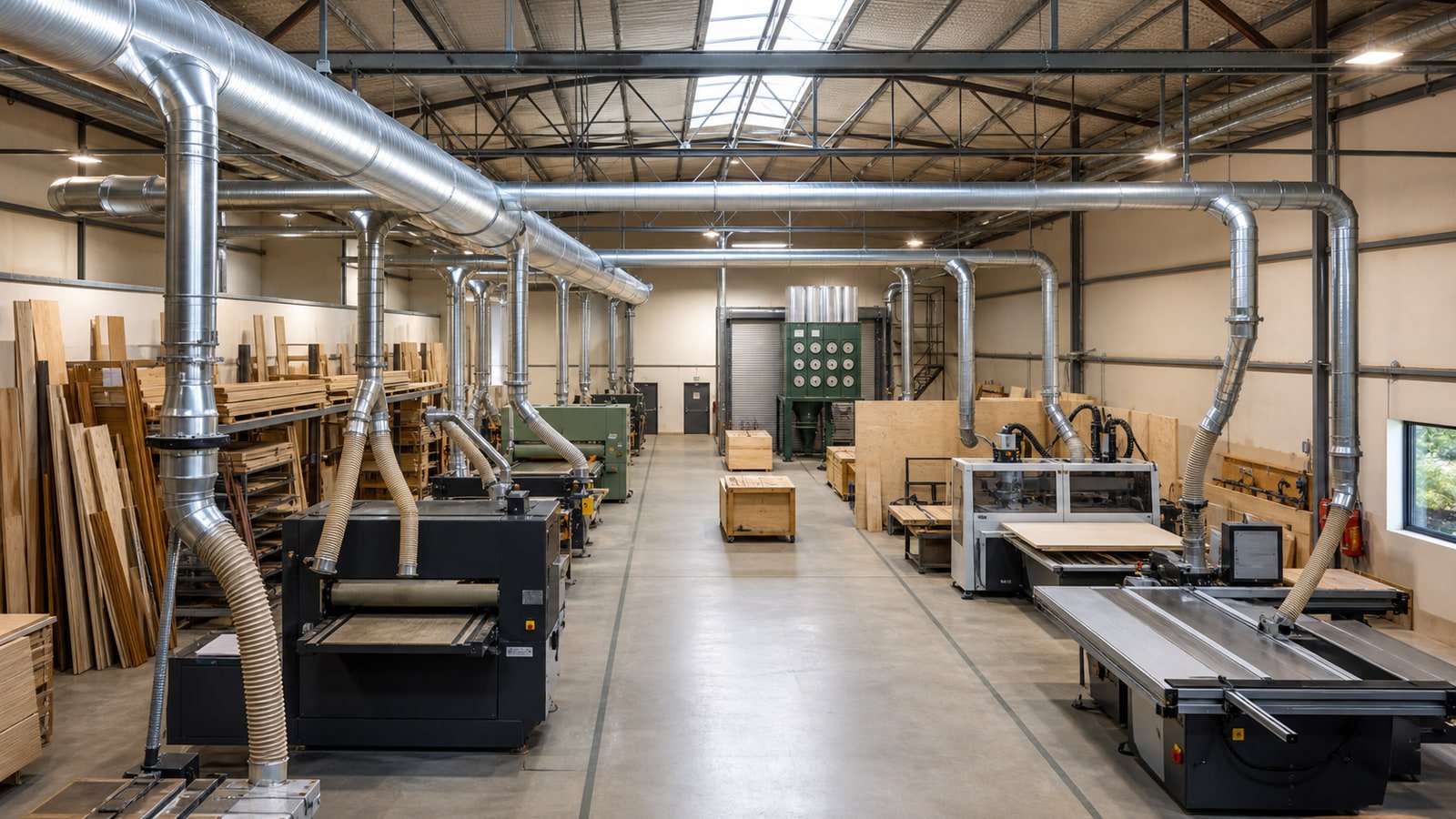
Planning Dust Collection for Multiple Woodworking Machines
Build a shop dust-collection plan around connected machines, simultaneous use, duct resistance, filtration, waste handling, facility conditions, and future changes.
Read guide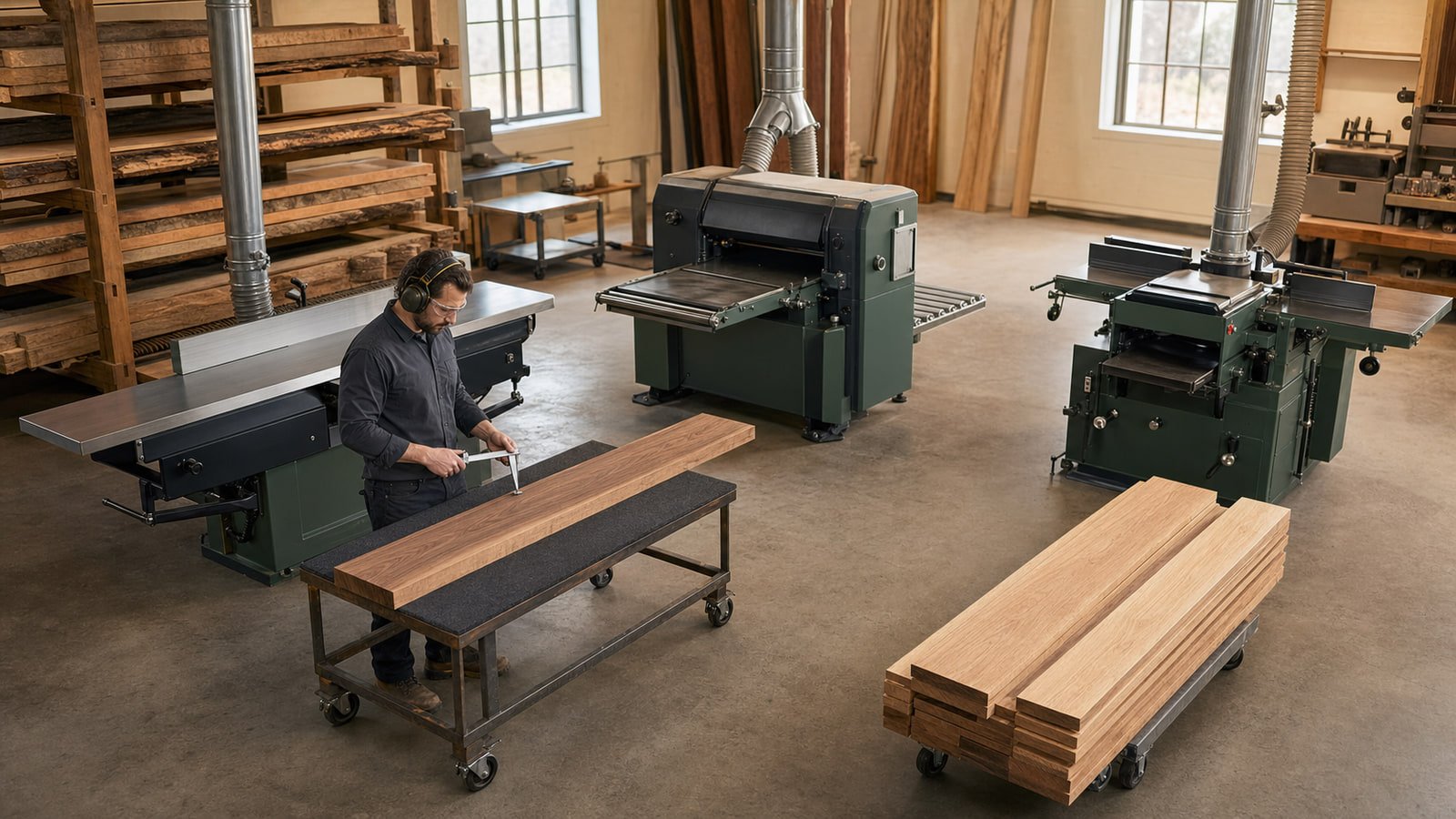
Jointer, Planer, or Combination Machine? Mapping the Stock-Preparation Workflow
Understand what each machine contributes to flattening, straightening, and thicknessing stock before deciding between separate and combination equipment.
Read guide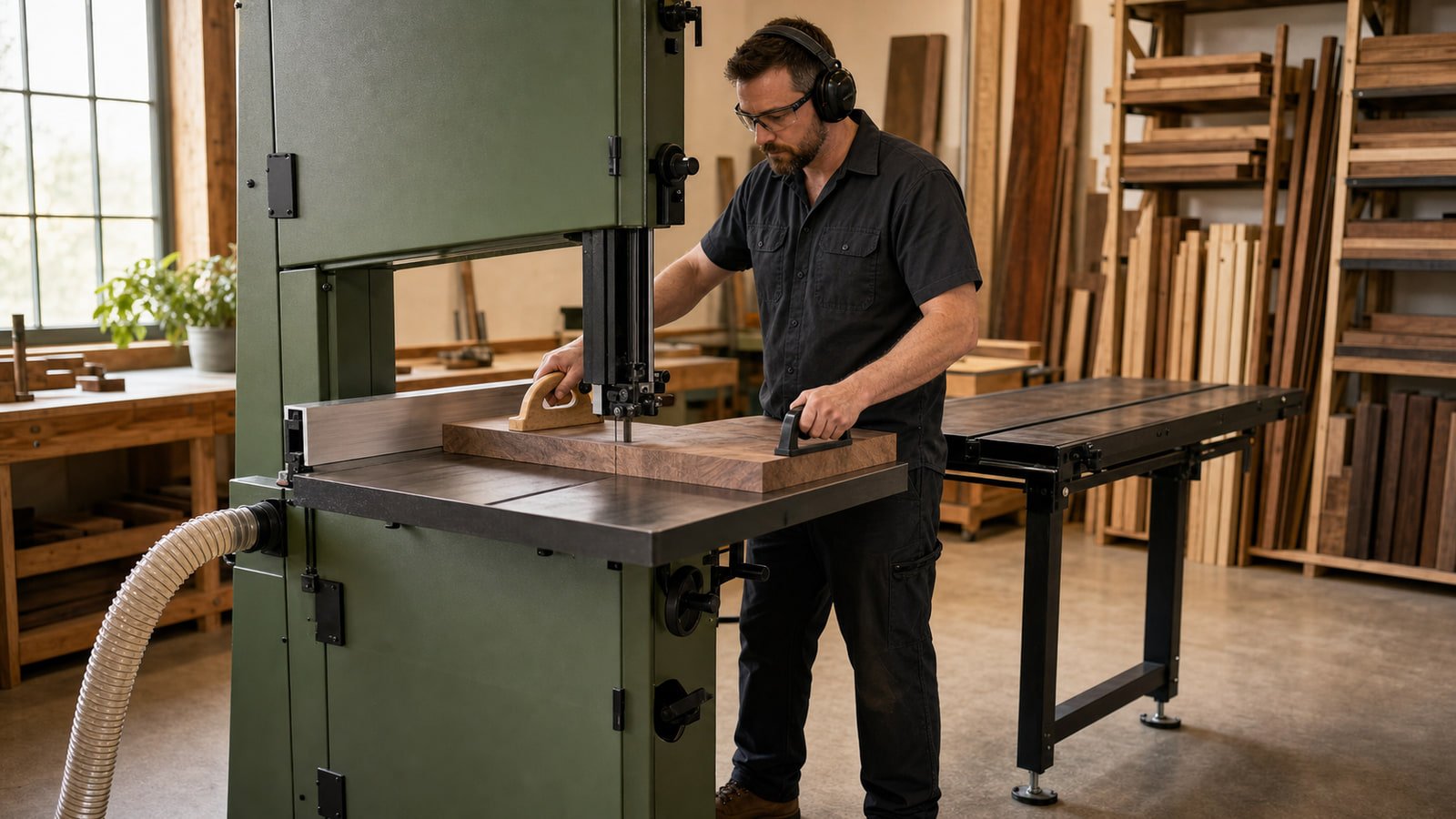
How to Choose a Bandsaw and Blade for the Work You Actually Cut
Match the bandsaw format, cutting envelope, blade, feed method, support, power, and dust collection to the material and cuts your shop performs.
Read guide