

Blog
Single-Phase vs. Three-Phase Woodworking Machinery: What to Verify Before Ordering

Site Planning
Single-Phase vs. Three-Phase Woodworking Machinery: What to Verify Before Ordering
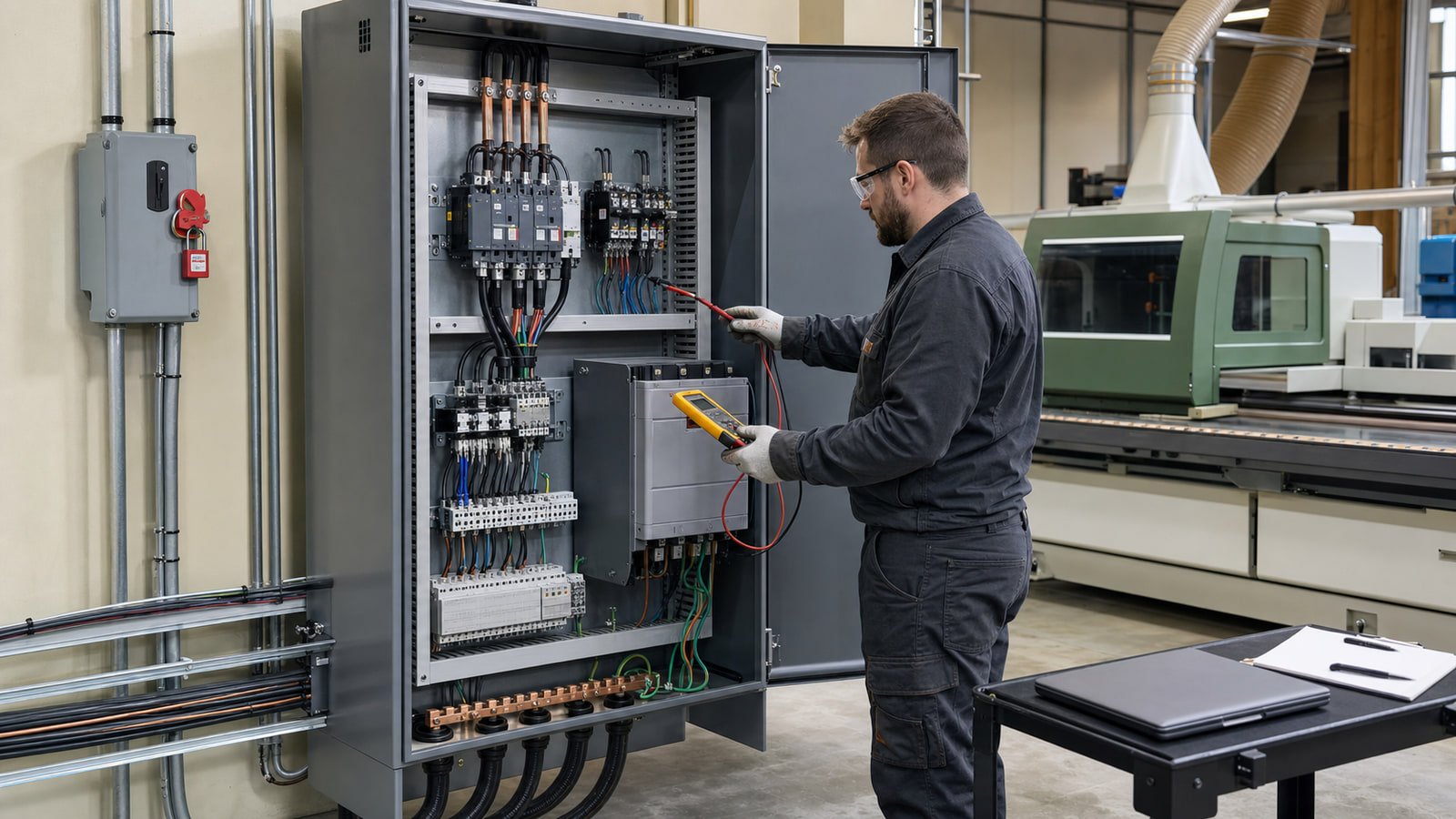
Confirm the machine nameplate, facility supply, complete connected load, and qualified electrical plan before placing a machinery order.
Electrical phase is a purchase requirement, not a detail to solve after a machine arrives. Two units with similar working capacity may be built for different voltage, phase, frequency, current, control, and protective-device requirements.
The safest purchasing rule is simple: verify the exact machine configuration against the exact facility connection before the order is accepted.
> This article is general purchasing guidance, not electrical design advice. A qualified electrician or engineer must evaluate the facility, machine documentation, local requirements, and proposed installation.
Understand what phase identifies
Alternating-current electrical supplies are commonly described as single-phase or three-phase. The available service varies by building and location. Industrial equipment may be offered in one phase, several electrical versions, or only a specific configuration.
Phase does not stand alone. The machine must also match the required voltage and frequency, and the supply must support the connected load and starting behavior. Never assume that a building described informally as having “industrial power” matches a machine nameplate.
The only reliable starting points are the current machine documentation and a professional assessment of the proposed point of connection.
Record the facility supply accurately
Ask a qualified electrician to document:
- Available voltage at the proposed location
- Single-phase or three-phase service
- Supply frequency
- Main service and distribution capacity
- Available panel and circuit capacity
- Distance and pathway to the machine
- Grounding and bonding conditions
- Disconnect, overcurrent, conductor, and installation requirements
- Any planned building or service changes
A wall receptacle or existing disconnect is not proof that the circuit is suitable. Its rating, wiring, protection, condition, and upstream capacity still require verification.
Use the exact machine documentation
Request the electrical data for the specific model, production version, and selected options—not a related model or a family brochure. The review may include:
- Rated voltage, phase, and frequency
- Full-load or rated-current information
- Minimum circuit or supply requirements stated by the manufacturer
- Maximum overcurrent protection, where provided
- Disconnect and connection details
- Motor starting or drive information
- Control transformer or control-circuit requirements
- Grounding instructions
- Environmental and enclosure requirements
- Approved field-conversion options, if any
If any field is unclear, obtain written clarification before ordering. Do not infer electrical compatibility from horsepower alone.
Count every component in the equipment cell
The main machine may be only one electrical load. A complete system can also include:
- Vacuum pumps
- Dust collectors or extraction fans
- Compressed-air equipment
- Hydraulic power units
- Conveyors, feeders, or return systems
- Heating or adhesive systems
- Chillers, cooling units, or heaters
- Transformers
- Computers, controls, printers, or network equipment
- Material-handling and lifting equipment
Some items may be powered from the machine; others may need independent circuits. Request a complete connection schedule for the quoted configuration and compare it with the accepted commercial scope.
Do not assume a phase converter solves the problem
Phase converters, variable-frequency drives, transformers, and other electrical equipment serve different purposes. They are not interchangeable, and an aftermarket solution may be incompatible with controls, brakes, heaters, multiple motors, electronic drives, safety circuits, or manufacturer requirements.
Before considering any conversion approach, obtain written confirmation from the machine manufacturer and have a qualified professional design the complete system. Confirm how the proposed arrangement affects startup, controls, protective devices, service, and manufacturer warranty terms.
Never modify a machine nameplate, internal wiring, motor, or control system without documented authorization and qualified execution.
Compare ordering options before changing the building
Some machines may be available in more than one electrical version, while others are built only for a particular supply. Ask early enough to compare:
- Factory electrical configurations
- Lead-time implications for the selected configuration
- Differences in included motors, controls, or transformers
- Required field connection
- Building-service changes
- Location of disconnects and panels
- Future machine plans for the same area
The appropriate decision may involve the machine, the facility, or both. That decision should be made with complete written information—not after freight is scheduled.
Include dust collection and compressed air
Electrical planning often uncovers related utility questions. A machine may require a dust collector with its own load or compressed air supplied by equipment elsewhere in the building. Controls or gates may also need power or interconnection.
Document pressure, flow, air quality, duct connection, and extraction requirements alongside the electrical schedule. This keeps the utilities for the complete process in one site-readiness review.
Plan the installation pathway
The electrician may need access above, behind, or beside the machine. Show the proposed machine position, electrical cabinet, control station, disconnect, conduit path, dust duct, air connection, maintenance panels, and operator area on the floor plan.
Coordinate rough-in timing with receiving, rigging, final placement, assembly, and commissioning. Permanent connections should not obstruct the move path, and machinery should not be energized until the required inspections, setup, and manufacturer procedures are complete.
Final responsibilities for connections, startup, and related services should be documented in the accepted written order or quotation.
Electrical verification checklist
Before approving a machinery order, confirm:
- Exact model, serial configuration, and selected options
- Machine voltage, phase, frequency, and current information
- Every auxiliary load in the equipment cell
- Facility voltage, phase, frequency, and available capacity
- Connection, disconnect, and protection plan
- Route and clearance for electrical work
- Written approval for any proposed conversion equipment
- Dust-collection and compressed-air dependencies
- Party responsible for each site and machine connection
- Required inspections and startup sequence
If the machine data and the site data have not been compared by qualified people, the electrical plan is not finished.
Submit Your Equipment and Site Details
Share the machine, material, application, utilities, and site details that matter to your project.
Submit Your Equipment and Site DetailsRelated Reading
More Machinery Guidance

Wide-Belt, Drum, Edge, or Spindle Sander? Choosing the Right Sanding Machine
Start with the surface, shape, stock-removal goal, and production flow to determine which sanding-machine format belongs in your shop.
Read guide
What to Compare Before Buying an Edgebander
Define your panels, edge materials, finish standard, production pace, utilities, and maintenance plan before comparing edgebander configurations.
Read guide
Planning Dust Collection for Multiple Woodworking Machines
Build a shop dust-collection plan around connected machines, simultaneous use, duct resistance, filtration, waste handling, facility conditions, and future changes.
Read guide